
Is AI a force for good or a threat to humanity? We explore the 10 positive and 10 negative impacts of artificial intelligence in our daily lives, economy, and society. Learn how to navigate the future of AI.
We’re living through a revolution, not with banners and battles, but with algorithms and automation. Artificial Intelligence, or AI, has burst from the pages of science fiction into our pockets, homes, and workplaces. It’s the most transformative technology of our age, a powerful force promising a utopian future while simultaneously whispering warnings of a dystopian one.
The truth, as always, lies somewhere in the middle. AI is not inherently good or evil; it’s a tool, a double-edged sword whose impact depends entirely on how we wield it. To understand its immense potential and its profound risks, let’s break down the 10 positive and 10 negative things about AI’s growing presence in our world.
The Brilliant Benefits: 10 Positive Impacts of AI
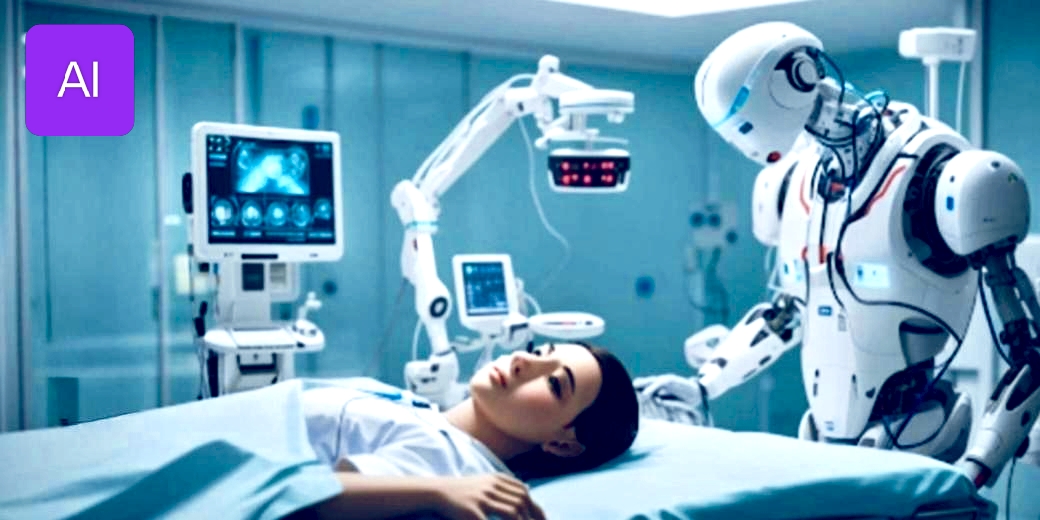
- Superhuman Healthcare: AI is revolutionizing medicine. From algorithms that can analyze medical images (X-rays, MRIs) with accuracy surpassing human radiologists to predicting disease outbreaks and personalizing treatment plans, AI is a powerful ally in saving lives and improving patient outcomes.
- A Turbocharged Economy: AI drives efficiency and innovation. It optimizes supply chains, predicts market trends, automates complex data analysis, and helps businesses make smarter, data-driven decisions. This boosts productivity and can lead to economic growth and new market opportunities.
- The End of Repetitive Drudgery: AI excels at automating mundane, repetitive tasks. This frees up human workers to focus on creative, strategic, and empathetic work—the things that humans do best. Imagine no more data entry, tedious scheduling, or manually sifting through thousands of resumes.
- A Hyper-Personalized World: The recommendations on your Netflix and Spotify? That’s AI. It learns your preferences to curate content, shopping suggestions, and even news feeds. This personalization enhances user experience, making technology feel more intuitive and tailored to our individual needs.
- 24/7 Availability and Support: AI-powered chatbots and virtual assistants provide customer service around the clock. They can handle simple queries instantly, resolve issues efficiently, and ensure help is always available, improving customer satisfaction and streamlining support operations.
- Unprecedented Safety and Security: AI algorithms can monitor security footage in real-time to detect suspicious activity, identify cybersecurity threats before they cause damage, and even be used in disaster response to map affected areas and coordinate rescue efforts.
- Breaking Down Barriers: AI-powered translation tools are breaking down language barriers in real-time, fostering global communication. Voice-to-text and text-to-voice technologies empower individuals with disabilities, creating a more inclusive and accessible digital world.
- Supercharging Scientific Discovery: Researchers are using AI to model complex climate change scenarios, discover new materials, analyze vast genomic datasets, and even accelerate drug discovery. It helps scientists process information at a scale impossible for humans alone.
- Smarter Resource Management: AI is key to building a sustainable future. It optimizes energy grids to reduce waste, helps farmers practice precision agriculture to use less water and fertilizer, and improves traffic flow in cities to cut down on emissions.
- Enhanced Creativity (Yes, Really!): Far from replacing artists, AI is becoming a new creative tool. It can assist musicians with composition, help writers overcome blocks, generate stunning visual art for inspiration, and open up entirely new forms of artistic expression.
10 Negative Impacts of AI
- The Job Displacement Dilemma: This is the most immediate and feared risk. As AI automates tasks, many jobs, particularly in manufacturing, data entry, and customer service, are at high risk. The challenge is a massive societal shift and the need for large-scale reskilling.
- Baked-In Bias and Algorithmic Injustice: AI systems learn from data created by humans—and humans are biased. If trained on biased data, AI will perpetuate and even amplify these biases in areas like hiring, loan applications, and law enforcement, leading to discriminatory outcomes.
- The Erosion of Privacy: AI’s hunger for data is insatiable. The constant surveillance and data collection used to power these systems create a world where our every click, purchase, and movement is tracked, analyzed, and often sold, leading to a significant loss of personal privacy.
- The “Black Box” Problem: Many advanced AI systems are so complex that even their creators don’t fully understand how they arrive at a specific decision. This lack of transparency and accountability is dangerous when AI is making critical decisions in healthcare, justice, or finance.
- The Devaluation of Human Judgment: Over-reliance on AI could lead to the atrophy of our own skills and critical thinking. If we always trust the algorithm’s “answer,” we may stop questioning, verifying, and applying our own human intuition and judgment.
- Sophisticated and Scalable Misinformation: AI can generate incredibly realistic fake text, audio (deepfakes), and video. This power can be weaponized to create targeted propaganda, manipulate elections, damage reputations, and erode public trust in institutions and media.
- The Autonomous Weapons Threat: The development of AI-powered lethal autonomous weapons systems—”killer robots”—that can select and engage targets without human intervention presents a terrifying ethical and security crisis, potentially lowering the threshold for war.
- The Widening Socioeconomic Gap: The benefits of AI and automation will likely accrue to the owners of the technology and highly skilled workers, potentially skyrocketing inequality and creating a wider chasm between the tech-elite and the rest of the population.
- Social Isolation and Mental Health: As AI companions and curated digital worlds become more engaging, there’s a risk of people withdrawing from real-world human interaction. This could exacerbate issues of loneliness, social anxiety, and depression.
- The Existential Question (The “Singularity”): While still a long-term and theoretical concern, some leading thinkers warn of a future where an AI becomes so advanced that it surpasses human intelligence and control, leading to unforeseen and potentially catastrophic consequences for humanity.
The Path Forward: A Human-Centric Approach
This list isn’t meant to scare you or fill you with unbridled optimism. It’s a call for awareness and action. The future of AI isn’t predetermined; it will be shaped by the choices we make today—the regulations we enact, the ethical frameworks we develop, and the education we invest in.
We must strive to build AI that is transparent, accountable, and fair. We must prioritize human-in-the-loop systems where AI augments rather than replaces human intelligence. Most importantly, we must never lose sight of the humanity that this technology is meant to serve.
The double-edged sword is in our hands. Let’s choose to wield it wisely.
What are your thoughts? Are you more excited or concerned about the rise of AI? Let’s discuss in the comments below!